

How to Plan a Home Gym Setup in India with the Right Equipment
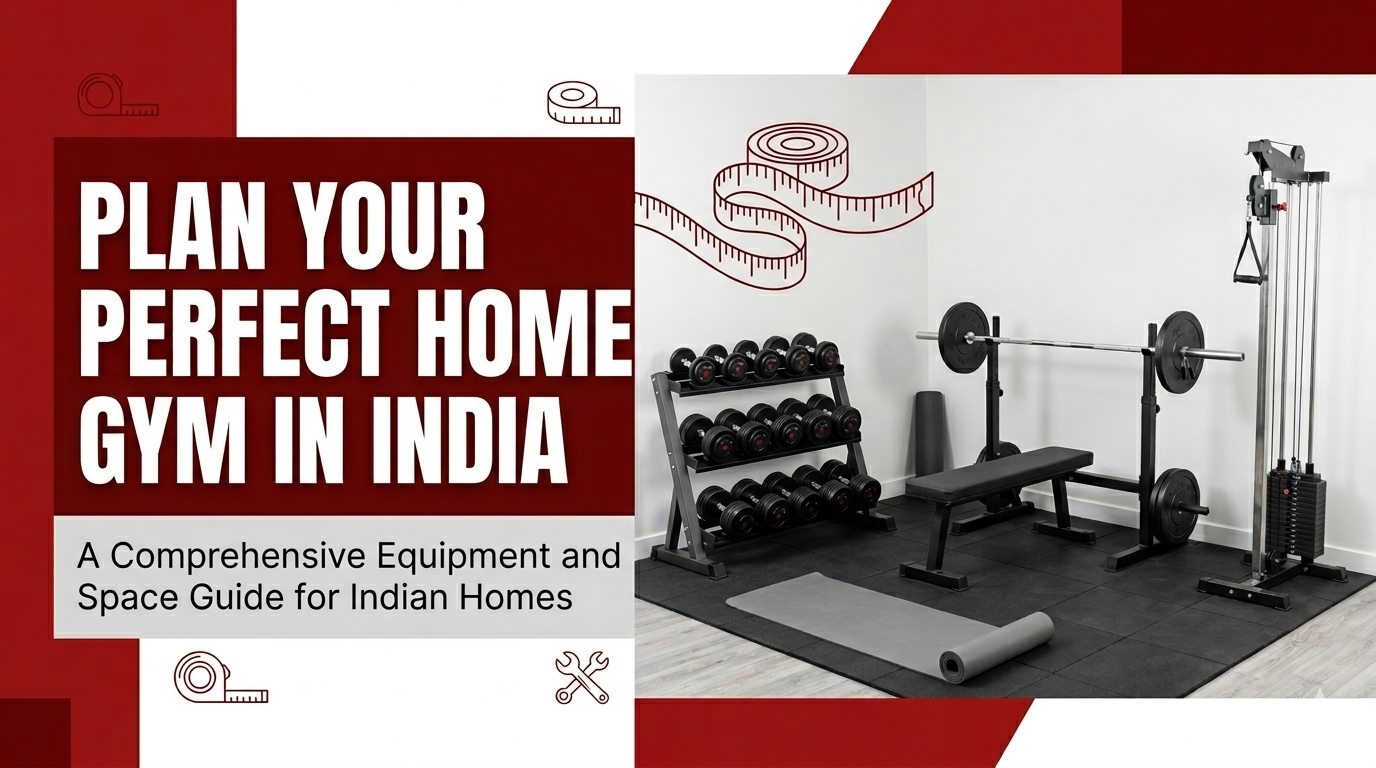
Setting up a gym at home sounds simple until you actually start planning it. Questions pile up fast: How much space do you need? What gym equipment should you buy first? How do you avoid spending money on things that end up collecting dust?
This guide walks you through everything, from measuring your room to picking the right home workout equipment for your goals and budget. No fluff, no filler. Just a practical plan you can follow.
Why More Indians Are Building Home Gyms
The shift toward home fitness in India is real and growing. The gym equipment market in India was valued at USD 630 million in 2024 and is projected to reach USD 1,372.80 million by 2033, growing at a rate of 8.10% annually, driven by changing lifestyles and higher demand for personal fitness setups.
Fifty-two percent of non-members in India say the primary reason they avoid commercial gyms is the cost. A home gym changes that math. You pay once for the equipment, then train whenever you want, for as long as you want, with no monthly fees.
There are other reasons people make the switch. Avoiding commutes. Training at odd hours. Skipping crowds. Once you have a gym set for home, these benefits stack up quickly.
Step 1: Figure Out Your Space Before You Buy Anything
This is where most people go wrong. They buy equipment first, then realize it does not fit their room. Do not make that mistake.
Here is the starting point: measure your workout area before placing a single order.
You can start with as little as 50 to 100 square feet for a basic equipment setup. That is roughly the size of a small bedroom corner.
Here is how to map your space:
-
Measure the length and width of the room.
-
Mark fixed obstacles: doors, windows, columns, and power points.
-
Leave at least 3 feet of clearance on all sides of each piece of equipment.
-
Account for ceiling height if you plan to do overhead movements.
A 10x10 foot room (about 93 square feet) gives you enough room for a bench, a set of dumbbells, and a resistance cable setup. A 12x15 room opens the door to a full multi-station machine.
If you are working with a small flat in a metro city, do not worry. A compact home gym setup in 50 to 80 square feet can still cover strength training, stretching, and cardio.
Step 2: Set Clear Fitness Goals Before Choosing Home Gym Equipment
The equipment you need depends entirely on what you want to achieve. Buying a treadmill when your goal is muscle gain wastes space and money.
Let's break it down by goal:
-
Goal: Build muscle and strength You need free weights, a weight bench, and ideally a power rack or cable machine. Dumbbells, barbells, and plates give you the most training options per square foot.
-
Goal: Lose weight and improve cardio fitness Cardio machines like stationary bikes, rowing machines, or treadmills work well here. Combine them with resistance bands or a jump rope for variety.
-
Goal: General fitness and flexibility A yoga mat, resistance bands, adjustable dumbbells, and a pull-up bar give you a full-body workout without taking up much room.
-
Goal: Athletic performance and functional training Medicine balls, kettlebells, plyometric boxes, and battle ropes are worth adding. Wall balls and power bags also fall into this category.
Knowing your goal before you spend a rupee saves you from an expensive, cluttered room full of equipment you rarely touch.
Step 3: Choose the Right Gym Equipment for Your Home
Now to the practical part: what to actually buy.
Start with Versatile Free Weights
Dumbbells are the single most useful piece of home workout equipment you can own. They train every muscle group, take up minimal floor space, and work at any fitness level.
Adjustable dumbbells are ideal for home setups because one pair replaces an entire rack. You can shift from light warm-up sets to heavier working weights without buying multiple pairs.
A barbell and weight plates come next. With just a bar and a few plate sets, you can squat, deadlift, bench press, row, and overhead press. This combination gives you the foundation of any strength program.
A Bench Adds More Options Than You Think
A flat bench converts a simple dumbbell collection into a full upper-body training station. Add an incline-adjustable bench and your options multiply again: incline presses, decline sit-ups, step-ups, and more.
Look for a bench with solid construction and a weight capacity that exceeds what you plan to lift.
Cable Machines and Multi-Station Units for Complete Training
If you have more than 80 square feet and a budget for a mid-range setup, a cable machine or multi-gym unit is worth the investment. These let you train pulling and pushing movements across multiple angles, which you cannot replicate with only free weights.
Jerai Fitness, an Indian manufacturer with over three decades of experience, designs home gym machines specifically for residential use, covering a range of fitness needs with consistent build quality.
Jerai Fitness stocks a Home Range that includes multi-gym stations, dip stands, attachments, and accessories. Products are GST inclusive and backed by a field service team of 52 technicians across India.
Accessories That Round Out Your Setup
These smaller items deserve a spot in your home gym setup:
-
Resistance bands: Use them for warm-ups, rehabilitation, and progressive training.
-
Kettlebells: Good for swings, carries, and full-body conditioning.
-
Medicine balls and wall balls: Build explosive power and rotational strength.
-
Gym belt and lifting straps: Protect your lower back during heavy lifts.
-
Jump rope: One of the most space-efficient cardio tools available.
Step 4: Plan Your Layout for Safety and Flow
Once you know what you are buying, place it thoughtfully. A poorly arranged room is both dangerous and annoying to train in.
Layout principles to follow:
-
Keep cardio equipment near a window or fan for ventilation.
-
Position weight racks against a wall to free up the center of the room for movement.
-
Place your mat area where you have the most open floor space.
-
Store smaller items like bands, belts, and jump ropes on wall-mounted hooks or a shelf.
-
Leave a clear path between each zone so you can move safely between exercises.
Using vertical storage keeps floors clear. Mount wall hooks for resistance bands and yoga mats, and install floating shelves for smaller items like gloves or jump ropes.
A mirrored wall on one side of the room helps you check form and makes the space feel larger than it is.
Step 5: Set a Realistic Budget for Your Home Gym Setup
Home gym costs vary widely depending on the equipment you choose.
Here is a rough breakdown for Indian buyers:
|
Setup Type |
Approximate Budget (INR) |
What You Get |
|
Starter setup |
₹15,000 – ₹35,000 |
Mat, resistance bands, adjustable dumbbells, jump rope |
|
Mid-range setup |
₹40,000 – ₹1,20,000 |
Bench, dumbbell set, barbell and plates, pull-up bar |
|
Full home gym |
₹1,50,000 – ₹5,00,000+ |
Multi-station machine, full weight set, cardio machine |
One thing most people underestimate: flooring. Rubber gym tiles protect your floor and reduce equipment noise. Budget at least ₹3,000 to ₹10,000 for this depending on room size.
Also factor in GST, delivery, and installation charges where applicable. Most quality manufacturers include these details on their product pages.
Step 6: Think About Durability, Not Just Price
Cheap gym equipment for home use tends to fail under regular load. Welds crack, cables fray, and paint chips. When that happens with heavy weights involved, it becomes a safety issue.
Look for these when evaluating any piece of equipment:
-
Powder-coated steel frames for rust resistance.
-
Weight capacity that exceeds your current max by at least 30%.
-
Cable and pulley systems made from reinforced materials.
-
Clear warranty terms and accessible after-sales service.
Jerai Fitness incorporates robotic welding, advanced assembly techniques, and high-precision machinery into its production process to meet international standards for accuracy and durability.
When you buy home gym equipment from a manufacturer with after-sales support, you get someone to call if something goes wrong. That matters more than a slightly lower price tag.
Step 7: Make the Space One You Actually Want to Train In
A gym you avoid is money wasted. Small environmental details make a real difference in whether you show up consistently.
Things that improve your training environment:
-
Lighting: Bright lighting makes the space feel energetic. Add a direct light source if your room has dim overhead fixtures.
-
Ventilation: A ceiling fan or window exhaust fan keeps the air moving during intense sessions.
-
Music: A wall-mounted Bluetooth speaker or even a small shelf for your phone works fine.
-
Mirrors: Help with form and make narrow spaces feel more open.
-
Temperature: Rooms that overheat in summer or get cold in winter affect your motivation. Plan for this before summer arrives.
What to Buy First If You Are on a Tight Budget
If money is limited right now, start with this sequence:
-
Yoga mat and resistance bands (₹2,000 – ₹5,000): Lets you train bodyweight and band exercises from day one.
-
Adjustable dumbbells (₹5,000 – ₹15,000): Opens up strength training for almost every muscle group.
-
Flat weight bench (₹5,000 – ₹12,000): Multiplies what you can do with dumbbells.
-
Pull-up bar or dip stand (₹2,000 – ₹5,000): Adds back, bicep, and bodyweight work.
-
Barbell and plates (₹8,000 – ₹25,000): The next upgrade for serious strength training.
Add equipment one step at a time. Each purchase should earn its place before you move to the next.
Gym Equipment for Home: Common Mistakes to Avoid
People planning their first home gym setup make the same errors repeatedly. Here are the ones to watch out for:
Buying too much too soon. A room full of barely-used machines is not a gym. It is storage. Start minimal and add as your training demands grow.
Ignoring flooring. Dropping weights on bare tile damages both your floor and the equipment. Gym tiles are not optional.
Skipping measurements. A machine that looks small in a showroom can dominate your room at home. Always measure twice.
Choosing price over safety. For any equipment that holds significant weight above or near your body, buy quality. A barbell collar or cable pulley failure can injure you.
Not planning for maintenance. Cables need periodic lubrication. Weight plate storage racks prevent damage. Factor in basic upkeep from the start.
FAQs About Home Gym Setup in India
Q1: How much space do I need for a home gym setup in India?
You can build a functional home gym in as little as 50 square feet. A 10x10 foot room (100 sq ft) comfortably fits a bench, dumbbells, and a cable unit. Larger spaces allow cardio machines and full rack systems. Measure your room before buying anything.
Q2: What is the minimum gym equipment needed to start a home workout routine?
A yoga mat, a set of adjustable dumbbells, and a resistance band set give you enough to run a full-body workout program from day one. A flat bench and a pull-up bar are the natural next additions for anyone focused on strength.
Q3: Is buying home gym equipment worth it compared to a commercial gym membership?
Over three to four years, a home gym almost always costs less than a gym membership when you factor in recurring fees, travel, and time. The investment makes more sense if you train consistently. Equipment holds its resale value, which a membership does not.
Q4: What should I look for in home gym equipment before buying?
Check the weight capacity, frame construction (steel with powder coating), cable and pulley quality, and warranty terms. Read user reviews from Indian buyers specifically, as climate and usage patterns here differ from international markets. Confirm that after-sales service is available in your city.
Q5: Can I buy gym equipment for home use directly from manufacturers in India?
Yes, and it is often a better route than retail. Manufacturers like Jerai Fitness sell directly through their website at their website, with GST-inclusive pricing and a field service network covering India. Buying direct usually means better warranty support and more accurate product information.