

Top Fitness Equipment & Gym Equipment with Best Dumbbells for Home Use
Setting up a home gym is no longer a luxury reserved for athletes or the wealthy. Millions of people across India now train at home, and the demand for quality gym equipment has grown steadily since 2020. Whether you are a beginner buying your first set of dumbbells or someone looking to build a full personal training station, making the right choices from the start saves money, space, and frustration.
This guide breaks down what you actually need, what to look for, and how to build a practical home gym around proven fitness equipment.
Why More People Are Choosing Home Gym Equipment Over Commercial Gyms
The math is straightforward. A gym membership in most Indian cities runs anywhere from ₹1,500 to ₹5,000 per month. Over five years, that adds up to ₹90,000 to ₹3,00,000 with nothing to show for it at the end.
Home gym equipment, on the other hand, is a one-time purchase. You own the gear, you use it on your schedule, and you avoid commute time, crowded floors, and shared machines.
Here is another reason home training is gaining ground: space-conscious design has improved dramatically. Compact multi-function training stations now pack cable systems, weight storage, pull-up bars, and resistance training into a single frame that fits comfortably in a bedroom or living space.
What Counts as Essential Fitness Equipment for Home?
Let's break it down by training goal.
For Strength Training
Dumbbells remain the single most versatile tool in any home gym. A good pair of dumbbells for home use lets you train chest, back, shoulders, arms, and legs without needing multiple machines. They also work for stabilizer muscle training that barbells and machines cannot fully replicate.
Barbells and weight plates matter when you move past beginner-level strength. A standard barbell allows progressive overload on compound movements like deadlifts, squats, and bench press. Look for knurled steel bars with proper collar locks.
A multi-station training rack brings everything together. Modern personal training stations include a weight stack, cable pulley system, chest press, lat pulldown, and leg extension in a single footprint. This type of gym equipment suits home users who want commercial-grade training without dedicating an entire room.
For Cardio and Conditioning
Treadmills remain the most purchased cardio machine in India. Look for models with at least a 2.5 HP motor for regular use, and check the running belt width, which should be no less than 45 cm for comfortable stride length.
Spinning bikes offer a low-impact alternative that works the cardiovascular system hard without stressing knees and joints. They are especially popular for high-intensity interval training at home.
Medicine balls, wall balls, and power bags are inexpensive tools that add functional conditioning to any training plan. A single medicine ball set covers rotational power work, core training, and explosive movements.
For Accessory and Functional Training
Kettlebells, dip stands, resistance cables, and plyometric boxes round out a well-planned home gym. These tools fill training gaps that dumbbells and machines leave behind, covering balance, agility, power, and mobility.
Choosing the Best Dumbbells for Home Use
This section alone answers one of the most searched questions in fitness: what type of dumbbell is best for home training?
Here is a quick breakdown:
Fixed rubber hex dumbbells are the most common choice. The hexagonal shape prevents rolling, the rubber coating protects floors, and the fixed weight means no loose collars to tighten. These work well for most home users.
Adjustable dumbbell sets save space significantly. One pair replaces an entire rack of weights by letting you change load in seconds using a selector pin or spin-lock collar. They cost more upfront but save floor space, which matters in smaller homes.
Cast iron dumbbells are durable and cost-effective but can mark flooring if dropped without rubber mats. Better suited to garage setups than carpeted or tiled rooms.
What weight range should you buy?
- Beginners: 2 kg to 20 kg range covers most exercises
- Intermediate lifters: 10 kg to 40 kg
- Advanced users: 20 kg and above, or adjustable sets that go up to 50 kg per hand
If you are buying a fixed set, buy in pairs across multiple weights rather than just one heavy pair. Lighter dumbbells for accessory movements and heavier ones for compound presses give you more programming flexibility.
How to Evaluate Gym Equipment Before You Buy
Not all gym equipment is built the same. Here is what to check before committing to a purchase.
Weight stack quality: For cable machines and multi-stations, look at the weight stack material and pin mechanism. Selectorized stacks with smooth pin entry reduce wear over time.
Frame steel gauge: Thicker steel gauge means longer product life. Most commercial-grade home machines use 11-gauge to 14-gauge steel. Anything thinner may flex under heavy load.
Cable and pulley rating: Cables on home gym stations should carry a rated load well above your expected usage. A 200 kg cable rating on a machine you plan to use at 80 kg leaves meaningful safety margin.
Warranty terms: A reputable manufacturer backs structural components for at least two to three years. Wear items like cables and upholstery have shorter warranties, but they should be replaceable.
Assembly support: Large multi-station units require professional assembly for correct tensioning, alignment, and safety. Check whether your supplier includes this or offers it as an add-on service.
Building a Home Gym in Phases
You do not need to buy everything at once. Here is a practical phased approach.
Phase 1: Foundation (under ₹25,000) Start with a set of rubber hex dumbbells across three to four weight pairs, a gym mat, and a resistance band set. This covers full-body workouts, mobility work, and basic strength training.
Phase 2: Core Strength Setup (₹25,000 to ₹1,50,000) Add a barbell and weight plate set, a basic dip stand, and a pull-up bar. At this stage, you can run a proper strength program with progressive overload on all major movement patterns.
Phase 3: Complete Training Station (₹1,50,000 and above) A personal training station or super personal training station replaces most of what a commercial gym offers. These units include integrated cable systems, weight storage, and multiple training attachments in one frame.
Jerai Fitness offers this entire progression. Their catalogue covers accessories like gym belts and leather kettlebells at entry-level price points, then scales up to full Personal Training Station 360 and Super Personal Training Station models for users who want a complete training setup. They also carry treadmills, spinning bikes, plyometric softbox sets, and a dedicated dumbbells, plates, and barbells collection. Additionally, Reebok partners with Jerai Fitness for gym equipment in India.
Fitness Equipment Maintenance: Making Your Gear Last
Buying quality gear is step one. Keeping it in good shape is step two.
Wipe down after every session. Sweat corrodes metal surfaces over time. A damp cloth with mild disinfectant after each workout prevents rust and keeps upholstery in good condition.
Check cable tension monthly. Cables on pulley systems stretch with use. Most manufacturers specify a minimum strand diameter before replacement is needed. Do not wait for a cable to snap.
Lubricate treadmill belts. Most treadmill manufacturers recommend belt lubrication every three to six months depending on usage frequency. Check your unit's manual for the correct lubricant type.
Store dumbbells on proper racks. Leaving dumbbells on the floor creates trip hazards and causes floor damage. Dumbbell racks also make it easier to select the right weight quickly during a workout.
Inspect bolts and fasteners. Vibration from training loosens bolts over time. A monthly inspection of all visible fasteners on multi-station units keeps the equipment safe.
Space Planning for a Home Gym
Before ordering any large piece of gym equipment, measure your space carefully. Jerai Fitness includes product dimensions in their listings, and their terms specifically note that buyers should verify available space before placing an order.
Here are general space guidelines:
- A treadmill needs roughly 200 cm x 100 cm of clear floor space plus 60 cm of safety clearance at the back
- A personal training station typically needs 200 cm x 150 cm plus 90 cm of working clearance on all active sides
- A spinning bike needs roughly 120 cm x 60 cm plus 60 cm of movement clearance around the user
- A dumbbell rack with weights needs a minimum of 90 cm depth and varies by width based on how many pairs you store
Rubber gym flooring tiles protect your floor and reduce equipment noise. They also add grip underfoot during heavy lifts.
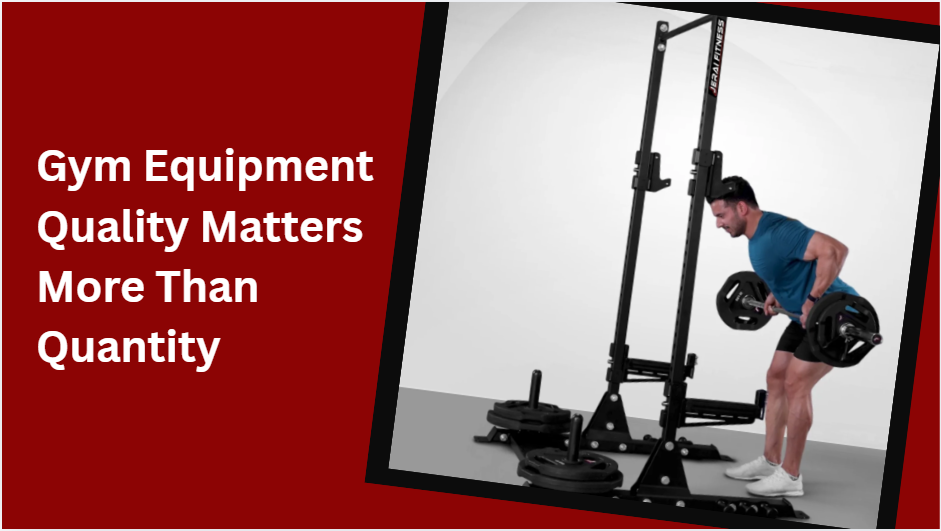
Why Equipment Quality Matters More Than Quantity
A common beginner mistake is buying many cheap pieces of equipment rather than fewer quality ones. A poorly built cable machine with frayed cables is not just frustrating; it is a safety risk. A treadmill motor that burns out after six months ends up costing more in replacement or repair than a better unit would have cost from the start.
Look for brands that design and manufacture in India, carry proper GST-compliant pricing, offer professional assembly services, and publish clear warranty terms. These signals indicate an organized operation that will still be around when you need after-sales support.
Jerai Fitness, for example, is a fitness equipment brand that designs and manufactures their products in India. Their home gym range is listed at jeraihomegym.com with GST-inclusive pricing, clear assembly service options, and published warranty and refund policies. This kind of transparency makes comparison shopping easier and reduces the risk of purchasing from manufacturers who disappear after the sale.
FAQs: Home Gym Equipment and Dumbbells for Home
Q1: What is the best type of dumbbell for home use?
Rubber hex dumbbells are the most practical choice for home use. They do not roll, the coating protects floors, and they require no maintenance. Adjustable dumbbell sets are a good alternative if space is limited, as a single pair covers a wide weight range without needing a full rack.
Q2: How much space do I need for a home gym?
A functional home gym can fit in as little as 3 x 3 meters. A basic setup with dumbbells, a mat, and a dip stand works in even less. A full personal training station needs closer to 3 x 4 meters with working clearance on active sides. Always check product dimensions before buying.
Q3: Is home gym equipment worth the cost compared to a gym membership?
For most people, yes. The average gym membership in Indian cities costs ₹2,000 to ₹4,000 per month. A quality home setup pays for itself within two to four years and continues delivering value well beyond that without recurring fees or travel time.
Q4: What gym equipment should a beginner buy first?
Start with a set of dumbbells for home training, a yoga or gym mat, and a resistance band set. These three items cover a full range of beginner workouts at low cost. Add a dip stand or pull-up bar once you are consistent with training, then scale up to a cable machine or training station as your program advances.
Q5: How do I maintain my home gym equipment?
Wipe down equipment after every session, check cable condition and bolt tightness monthly, lubricate treadmill belts every three to six months, and store all weights on designated racks or pegs. Following the manufacturer's maintenance schedule extends equipment life and keeps training safe.