

Choosing Home Gym Equipment Brands in India: What Buyers Should Compare
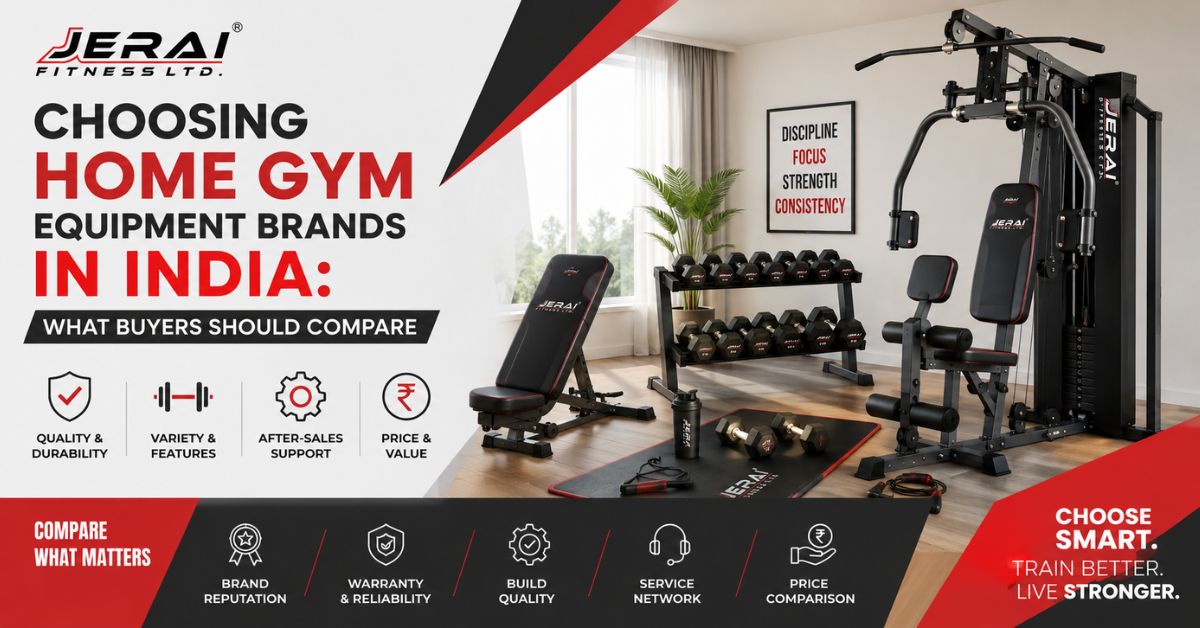
Walk into the market for home gym equipment brands in India, and the options multiply quickly. Dozens of brands, hundreds of products, prices ranging from a few thousand rupees to several lakhs, and salespeople ready to tell you that whatever they sell is exactly what you need.
Most buyers make the same mistakes: they focus on price first, check a few photos online, read three reviews, and place the order. Six months later, the machine develops a fault, the brand has no service technician within 200 kilometers, and the warranty claim turns into a months-long back-and-forth.
This guide gives you a structured way to compare home gym equipment brands before you buy. No guesswork, no brand loyalty pressure. Just a clear framework based on what actually matters over the long run.
Why the Brand Choice Matters More Than the Machine Spec
Here is the reality: two treadmills with nearly identical motor specs and price tags can have completely different ownership experiences depending on who made them.
The difference shows up in three places:
-
Build consistency. A brand that controls its manufacturing process end-to-end produces equipment that matches its specifications repeatedly. A brand that assembles imported components inconsistently may deliver machines that vary in quality from one unit to the next.
-
After-sales reach. A treadmill needs a belt replacement every few years. A multi-gym cable frays. A pulley wheel wears out. When that happens, you need a technician who knows the product and has access to spare parts. Without a service network, you own a very expensive piece of furniture.
-
Warranty transparency. A clear, written warranty that specifies what is covered, for how long, and under what conditions tells you how much confidence the manufacturer has in its own product. Vague warranty terms usually signal something.
India's gym equipment market was valued at USD 630 million in 2024 and is projected to reach USD 1,372.80 million by 2033, growing at a CAGR of 8.10%, driven by rising health awareness, home fitness adoption, and growth in commercial gym chains. With that much money moving through the sector, a significant number of lower-quality brands have entered the market. Knowing how to filter them out saves you money and frustration.
The Seven Things to Compare When Choosing a Fitness Equipment Brand
1. Manufacturing Origin and Process Control
There is a meaningful difference between a brand that manufactures its gym equipment in-house and one that sources white-labeled products from generic overseas suppliers and applies its logo.
In-house manufacturing means the brand controls the steel grade, the welding quality, the tolerances, and the finish. When something fails, the brand can trace the failure back through its own production process and correct it. When a brand is just reselling someone else's product, that accountability does not exist.
Look for brands that disclose their manufacturing location and process. Phrases like "Made in India," published factory information, and details about their production machinery and quality checks are good indicators of genuine manufacturing control.
Only a small number of Indian brands, including Jerai Fitness and Into Wellness, actually manufacture their equipment domestically. Most other companies import products from China and sell them under their own labels, which limits after-sales accountability and customization options.
Jerai Fitness, for example, runs an automated manufacturing plant using robotic welding and high-precision Turkish and Japanese machinery. Their process includes material inspection, in-process quality checks, final product testing, and environmental testing before the equipment ships. That level of process detail is something buyers can ask any brand to provide.
2. After-Sales Service Network
This is the factor that most Indian buyers underweight when purchasing fitness equipment, and it is the one that matters most after delivery day.
Here is what to ask before you buy:
-
How many service technicians does the brand have in India?
-
Are they company-employed or third-party contractors?
-
What is the average response time for a service visit in your city?
-
Are spare parts stocked locally or shipped from a central warehouse?
-
What happens if a part is no longer available?
Good brands offer one to three years on parts, one year on labor, and a longer structural warranty on quality equipment. Always check warranty terms carefully and prioritize after-sales service, which is non-negotiable for serious buyers.
Jerai Fitness maintains a post-sales infrastructure of 52 field technicians, 8 service coordinators, and 4 technical support specialists across India. That is a real, quantifiable service commitment, not just a promise printed in a brochure. When evaluating any brand, ask for the equivalent numbers.
3. Warranty Terms: What Is Actually Covered
Not all warranties are equal. A five-year warranty that excludes motors, cables, upholstery, and electronic parts offers very little real protection. A one-year warranty that covers everything, including labor, is often more useful.
Read the warranty document before you buy, not after. Look for:
-
Frame warranty: Should be the longest, typically three years or more for quality machines.
-
Motor warranty: Particularly relevant for treadmills and cardio machines. A one-year motor warranty on a machine used daily is inadequate.
-
Parts warranty: Covers cables, pulleys, bearings, and electronic components.
-
Labor warranty: Covers the cost of a technician visit for warranty repairs.
-
Exclusions: Note what the warranty does not cover. Common exclusions include consumables like belts, grips, and foam padding.
Also, check whether the warranty is tied to a service condition. Some brands require you to purchase an Annual Maintenance Contract (AMC) from them directly for the warranty to remain valid. This is worth knowing upfront so you can budget accordingly.
4. Steel Quality and Frame Construction
Gym equipment fails in predictable places: welds, cables, and frames. Here is what to look for when evaluating frame quality.
Steel gauge: Lower gauge numbers mean thicker steel. Commercial-grade machines typically use 10- to 12-gauge tubular steel. Home-grade equipment often uses thinner steel, which is acceptable for lighter use but will not withstand heavy daily training over the years.
Weld quality: Look at joints under good lighting. Welds should be smooth, even, and complete around the joint. Irregular, porous, or partial welds are signs of quality shortfalls. Brands that use robotic welding tend to produce more consistent joints than those using manual processes.
Powder coating: The surface finish on a frame protects it from moisture and corrosion. In Indian conditions, especially in coastal cities or humid climates, a properly applied powder coat matters significantly for longevity. Ask whether the brand uses electrostatic powder coating or a simpler spray finish.
Frame geometry: Well-designed machines have frames that distribute load efficiently across the structure. This becomes obvious when you notice whether a machine flexes or shakes under moderate use. Some movement in a loaded frame is normal; significant flex under light use is not.
5. Product Range Depth and Specialisation
A brand that sells treadmills, multi-gym stations, dumbbells, accessories, kettlebells, and resistance bands under one roof offers a convenience advantage for buyers building a full home setup. You deal with one warranty process, one service contact, and one delivery logistics chain.
That said, range breadth is different from range depth. A brand with fifty products superficially described is less useful than a brand with twenty products backed by detailed specifications, biomechanical rationale, and clear use cases.
When reviewing a brand's product range, check:
-
Do the products cover the fitness goals you have (cardio, strength, core, functional training)?
-
Are the products described with useful specifications (weight capacity, dimensions, resistance range)?
-
Is there a clear home range separate from a commercial range, or does the brand sell the same machines to both markets?
A machine designed for commercial gym use (heavy users, high daily volume) will be overbuilt and overpriced for home use. A machine designed only for home use will not hold up in a commercial setting. Brands that segment their range properly are more likely to have actually designed their products for their intended use.
Jerai Fitness runs a dedicated home range, distinct from its commercial products, covering multi-station machines, attachments, accessories, dumbbells, plates, and barbells. All products are GST-inclusive and designed for residential training environments.
6. Price and the Total Cost of Ownership
The sticker price of a piece of fitness equipment is the starting point, not the full cost. Add up these elements before comparing two brands on price:
-
GST: Confirm whether pricing is GST-inclusive or exclusive. Exclusive pricing adds 18% or more to the final amount at checkout.
-
Delivery and installation: Some brands include this; others charge separately. Installation on a multi-gym unit can cost ₹2,000 to ₹5,000 extra if not included.
-
AMC: If the warranty requires an annual maintenance contract, budget for that annual cost across the ownership period.
-
Spare parts availability: A cheap machine that requires imported spare parts with weeks-long lead times costs more in downtime and inconvenience than a slightly pricier machine with locally stocked parts.
-
Resale value: Equipment from known brands with service networks retains value better than no-name machines if you ever upgrade or relocate.
Here is a rough guide for home gym equipment budgets in India:
|
Setup Type |
Budget Range (INR) |
What to Expect |
|
Entry-level |
₹10,000 – ₹30,000 |
Resistance bands, adjustable dumbbells, a mat, and a jump rope |
|
Mid-range |
₹50,000 – ₹150,000 |
Treadmill or elliptical, dumbbell set, bench, barbell |
|
Full home gym |
₹200,000 – ₹500,000+ |
Multi-station machine, full weight set, cardio machine, cable unit |
Within each budget tier, the brand you choose determines how much of that spend survives five years of regular use.
7. Customer Reviews and Independent Feedback
Online reviews are imperfect but useful. Here is how to read them more accurately.
Filter by verified purchasers. Platform reviews from people who bought through that channel and used the product for a period carry more weight than unverified one-liners.
Look for reviews from 6 to 18 months post-purchase. Initial impressions miss the durability story. A machine that seems fine at six weeks may show wear at six months. Look for reviews that mention long-term use.
Search for after-sales experience. The most informative reviews often describe what happened when something went wrong. Did the brand respond quickly? Did the technician actually fix the problem? Was the replacement part easy to get?
Check independent fitness forums. Platforms like Reddit India fitness communities, local WhatsApp fitness groups, and YouTube review channels from Indian creators often provide more candid feedback than product pages.
Also, look at whether a brand has supplied equipment to verifiable institutional clients. Hotels, corporate wellness centers, government fitness programs, and sports academies make procurement decisions through a formal evaluation process. A brand with this track record has been vetted beyond individual consumer sales.
Indian Manufacturers vs. Imported Brands: What to Know
India's home gym equipment market includes both domestic manufacturers and imported or internationally branded equipment. Each has genuine advantages.
Domestic manufacturers offer closer after-sales support, faster spare parts access, equipment designed for Indian voltage and climate conditions, and pricing that does not carry import duties or currency risk. Their main disadvantage historically has been perception: imported brands carried a quality premium in buyers' minds even when the product quality was comparable.
That gap has narrowed considerably. Indian brands like Jerai Fitness, Powermax, and Viva Fitness offer high quality and are specifically built for Indian conditions, offering better after-sales service than imported brands.
International brands offer biomechanical research depth, premium materials, and brand recognition that holds resale value well. Their disadvantages are price (typically 30 to 60% higher than comparable domestic alternatives), longer service response times outside major metros, and spare parts that sometimes need to be imported.
For most home gym buyers in India, a domestic manufacturer with proven manufacturing processes, documented quality controls, and a real service network will deliver equivalent training results at a meaningfully lower total cost.
A Comparison Framework: Questions to Ask Every Brand Before Buying
Use this checklist when evaluating any home gym equipment brand:
Manufacturing:
-
Where is this product manufactured?
-
Does the brand control the manufacturing process, or does it source from third-party suppliers?
-
What quality testing does each unit undergo before shipping?
After-sales support:
-
How many service technicians does the brand have in India?
-
What is the average service response time in my city?
-
Are spare parts stocked locally?
Warranty:
-
What does the warranty cover specifically (frame, motor, parts, labor)?
-
What are the exclusions?
-
Is there an AMC requirement for the warranty to stay valid?
Frame and materials:
-
What gauge of steel is used in the frame?
-
What type of welding is used?
-
What surface finish protects against corrosion?
Pricing:
-
Is pricing GST-inclusive?
-
Are delivery and installation included?
-
What does the AMC cost annually?
Evidence:
-
What institutional or commercial clients has this brand supplied?
-
Are there independent long-term reviews from Indian buyers?
Any brand that cannot answer most of these questions confidently should prompt more caution before purchase.
How Jerai Fitness Compares on These Criteria
Jerai Fitness is an Indian manufacturer with over three decades of experience producing fitness equipment for commercial gyms, hotels, corporate wellness centers, and home users. Their equipment has been supplied to markets including Japan, the UAE, Australia, Serbia, Sweden, and other countries, which reflects compliance with multiple sets of international standards.
On the criteria above:
-
Manufacturing: Automated plant with robotic welding and high-precision Turkish and Japanese machinery. Four-stage quality control: material inspection, in-process checks, final product testing, and environmental testing.
-
After-sales: 52 field technicians, 8 service coordinators, 4 technical support specialists, and a pan-India showroom network of 14 locations.
-
Range: Dedicated home range covering multi-gym stations, attachments, accessories, dumbbells, plates, and barbells. GST-inclusive pricing.
-
Institutional track record: Supplied to commercial gyms, hotels, corporate wellness centers, real estate projects, and international markets.
You can review their home range and product specifications on their website. The site lists products with GST-inclusive pricing, and their contact page connects you to support for pre-purchase questions.
Red Flags When Evaluating a Brand
Watch for these warning signs as you research:
-
No physical address or factory information. If you cannot find where a brand manufactures or operates from, that is worth investigating before committing to a purchase.
-
Warranty terms buried in fine print. Transparent brands publish clear, accessible warranty documents. If you have to ask repeatedly to get the terms in writing, treat that as a signal.
-
Service contact that redirects repeatedly. Call the service line before buying. If getting a human on the phone requires significant effort, imagine what it will be like when you actually need a technician.
-
Suspiciously uniform reviews. A product page full of identical five-star reviews with no detail, posted within a short time window, is more likely to be managed than organic.
-
Prices that seem too far below market average. Quality steel, precision welding, and a service network all have costs. Equipment priced significantly below comparable alternatives is usually cheaper in its construction, not its margin.
FAQs: Choosing Home Gym Equipment Brands in India
Q1: How do I know if a home gym equipment brand in India actually manufactures its own products?
Ask the brand directly where their products are made and whether they own the manufacturing facility. Genuine manufacturers will share factory location, process details, and machinery information. Brands that only import and rebadge products typically give vague answers or redirect to marketing material rather than production details.
Q2: What warranty terms should I expect from a reliable fitness equipment brand?
A reliable brand typically offers a minimum of two to three years on the frame, one to two years on parts, and at least one year on labor. Motor warranties on treadmills should be at least one year for home use. Read the exclusions carefully and confirm whether an annual maintenance contract is required to keep the warranty active.
Q3: Is it better to buy gym equipment from a domestic Indian brand or an international brand for home use?
For most home gym buyers, Indian manufacturers with established service networks offer a more practical ownership experience. They provide faster service response, locally available spare parts, and equipment built for Indian climate and voltage conditions, often at 30 to 60% lower prices than imported alternatives with comparable build quality.
Q4: How important is the after-sales service network when buying fitness equipment?
It is one of the most important factors, often more important than the machine's specifications. All mechanical equipment eventually requires service or spare parts. A brand with a proven field technician network in your region means shorter repair turnaround times, lower ownership frustration, and a machine that stays operational for years longer than one from a brand with limited service reach.
Q5: Where can I compare home gym equipment brands and buy directly from a manufacturer in India?
You can visit manufacturer websites directly to compare range, specifications, and pricing. Jerai Fitness operates a home gym product line with GST-inclusive pricing and a pan-India delivery and service network. Their 14 exclusive showrooms across India also allow you to see and test equipment before purchasing.