

Multi Gym Machine vs Free Weights: Which Is Better for a Home Gym?
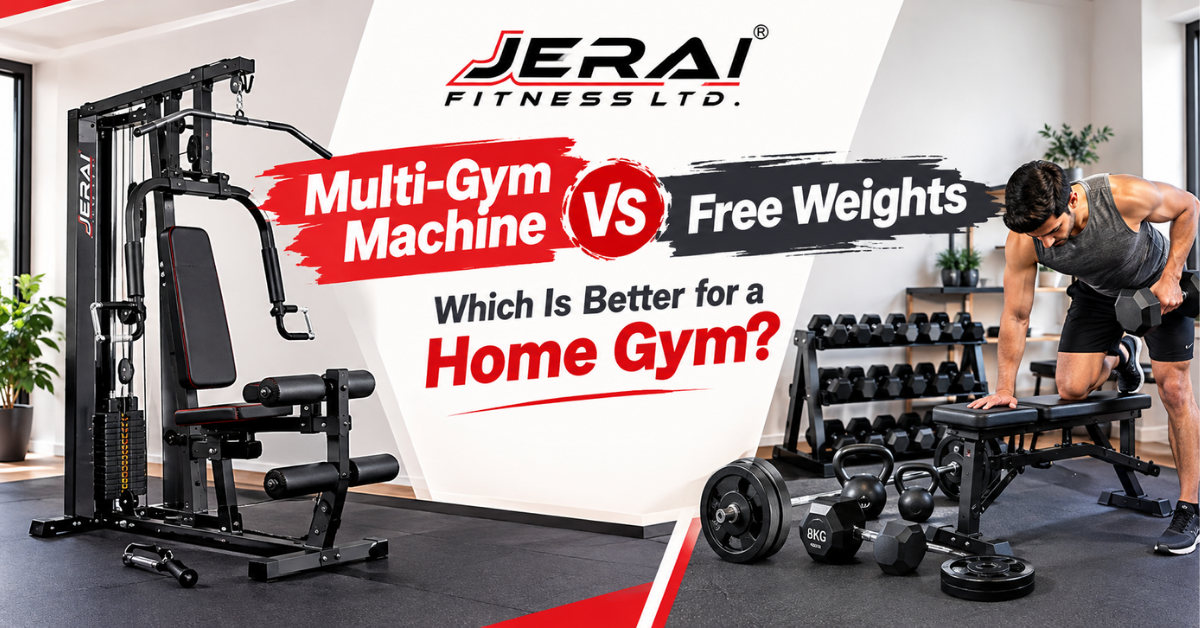
Walk into any Indian flat or villa and the same question comes up: do you buy a machine with a weight stack, or a rack of barbells and dumbbells? Space, budget, and training style decide the answer, and neither side wins every round. The multi gym vs free weights debate gets loud online, so this guide sticks to research and real prices.
Mumbai-based Jerai Fitness sells both sides of this choice, from dumbbells at Rs. 975 to selectorized gym boxes from Rs. 89,000. Its listings give us live numbers to work with. This multi gym machine buying guide compares both setups, shows what each costs in October 2026, and ends with checks you can run before you pay for a multi gym machine for home use. Let's break it down.
Which Is Better? A Quick Answer
-
Pick a multi station gym machine if you train alone, want guided movement paths, and need many exercises inside one floor footprint.
-
Pick free weights if you want a cheaper way in, easy storage, and small jumps in load as you progress.
-
Pick both once your budget and room allow it.
Here is why neither option wins outright: the research shows similar muscle gains from both, so the better setup is the one you will use three times a week.
Multi Gym vs Free Weights: What the Research Says
A 2023 systematic review and meta-analysis found no differences between free-weight and machine training in direct comparisons of strength, jump performance, and muscle size. The same authors add a twist. Strength gains stay specific to the training style, so free-weight training improved free-weight test scores more, while machine training tended to lift machine test scores more. The authors conclude that the choice comes down to personal preference and goals.
That finding matters for your purchase. If you want a bigger barbell squat, practise barbell squats. If you want stronger chest, back, and legs with less technical stress, a machine works. WHO also tells adults to do muscle-strengthening work for major muscle groups on two or more days a week. Any setup that gets you training on schedule can meet that target.
Safety also deserves a line. Healthdirect, an Australian government health service, advises new lifters to start with light weights or gentle resistance until their technique improves, and to check with a doctor or exercise professional first. That advice applies to both machines and bars.
Multi Gym Machine for Home: Where It Wins
A home multi gym machine bundles several stations around one frame. Here is what it does well.
-
Guided movement. The path is set by the machine, so you think less about balance and more about the working muscle.
-
Solo safety. A weight stack cannot pin you under a bar. You can stop a set and rest without a spotter.
-
Fast changes. Move a pin and switch loads in seconds. Plates and collars take longer.
-
Exercise variety in one footprint. Cable rows, lat pulldowns, presses, and curls share one station.
-
Low technical load. A new lifter can learn the pattern before chasing heavy weight.
The trade-offs are real. A weight-stack unit takes fixed floor space, often needs ceiling clearance, and cannot match the free-weight range of motion for every lift. Loads also rise in set steps, so small jumps can feel awkward.
Free Weights at Home: Where They Win
Dumbbells, kettlebells, and barbells train balance and coordination along with strength, since you control the path.
-
Cheaper entry. The site lists diamond cut dumbbells from Rs. 975 and an Olympic bar from Rs. 6,000.
-
Storage. Dumbbells slide under a bed or into a corner. Machines stay put.
-
Exercise range. Swings, snatches, lunges, carries, and presses all work with one set of gear.
-
Fine progress. You can add small plates as you improve.
-
Transfer. Free-weight lifts carry over to daily tasks that need balance, such as lifting a suitcase.
The trade-offs matter too. Heavy barbell work needs safety arms or a spotter. Form takes weeks to learn. Loose plates and bars also need a rack and flooring.
Side-by-Side Comparison: Machine or Barbell?
|
Factor |
Weight-stack multi gym |
Free weights |
|
Entry cost |
Higher |
Lower |
|
Floor space |
Fixed footprint, often tall |
Flexible, easy to store |
|
Learning curve |
Gentle |
Steeper |
|
Solo safety |
Strong, thanks to the stack |
Needs safety arms or a spotter |
|
Exercise variety |
Many, within the stations |
Many, limited by your imagination |
|
Load steps |
Set by the stack |
Fine, with small plates |
|
Noise and floor impact |
Moderate |
Higher when plates drop |
Types of Multi Station Gym Machine
Multi gym equipment for home use comes in four main shapes.
Selectorized Gym Boxes
A selectorized unit uses a pin and a built-in weight stack. The site lists a selectorized gym box with a high and low pulley from Rs. 89,000. The product page lists a 165 lb stack, a footprint of about 168 cm by 137 cm, and a height near 234 cm. Measure your ceiling before ordering.
Plate-Loaded Gym Boxes
A plate-loaded version uses weight plates you buy separately. The site lists a plate-loaded gym box with a high and low pulley at Rs. 69,000. You save upfront, but you also need plates and collars.
Compact and Wall-Mounted Units
Small rooms call for smaller kit. The site lists a foldable wall-mounted personal gym at Rs. 29,000 and a multi bench press with attachments at Rs. 25,000. My Gym Box, listed at Rs. 99,000, has a footprint of about 157 cm by 46 cm and includes storage for dumbbells, plates, and a bar, according to the product page.
Personal Training Stations
Larger stations pack a stack, cables, and storage into one unit. The New Super Personal Training Station 75 comes with 150 kg or 200 kg stack options. Prices on the site start at Rs. 99,000 for My Personal Trainer and reach Rs. 1,75,000 for the Super Personal Training Station.
Multi Gym Machine Price in India: What to Expect
Searching for a multi gym machine for home India shoppers can afford brings up a wide spread, so compare tiers rather than single prices. A fair multi gym machine price in India depends on the stack, the attachments, and the frame. These figures come from the listings checked in October 2026.
-
Compact tier: Rs. 25,000 to Rs. 29,000 for a bench-and-attachments combo or a wall-mounted unit.
-
Plate-loaded gym box: Rs. 69,000, plus plates.
-
Selectorized gym box: from Rs. 89,000, with a built-in stack.
-
Personal training stations: Rs. 99,000 to Rs. 1,75,000 and above.
Now compare that with a free-weight rack. An Olympic bar from Rs. 6,000, the Super Rack at Rs. 39,000, and the Multi Purpose Foldable Super Bench at Rs. 15,000 add up to Rs. 60,000 before plates. Rubberized plates start at Rs. 925. So a full barbell corner and a plate-loaded gym box land in the same price band. The machine adds cables and guided stations. The barbell setup adds free-weight range.
Delivery costs extra on the site, and assembly is a paid add-on. Add both to your budget.
Multi Gym Machine Buying Guide: Seven Checks Before You Order
-
Measure floor and height. Compare the listed footprint and height with your room. Tall stack units need real ceiling clearance.
-
Check the stack. A 165 lb stack suits many beginners. Lifters who press or pull heavy loads may want a bigger stack or a plate-loaded frame.
-
Count the stations. Match them to your week: pull, push, legs, and arms.
-
Review attachments. Handles, bars, and straps decide how many cable exercises you get.
-
Read warranty terms. Jerai Fitness's product pages split coverage by part, covering frames, bearings, and cables on separate terms. Some coverage also depends on a service contract.
-
Plan the logistics. The site says the buyer arranges unloading, delivery timelines can shift by 4 to 5 days, and some products need drilling or foundation work that assembly does not cover.
-
Confirm home use. The site states its products are for home use only, so heavy shared use may fall outside the terms.
Who Should Pick What?
You train alone in a small flat. A compact multi gym or a wall-mounted unit gives guided movements in a tight footprint.
You are new to lifting. Machines lower the technical load. Add a few dumbbells so you also learn free-weight patterns.
You train for a barbell sport. Choose a rack, bar, and bench. Strength follows the training style, so train the lifts you want to improve.
Your family shares the space. A selectorized unit lets different people change loads in seconds. Check the usage terms first.
You want a budget path. Start with dumbbells and bands, then add a bench. Buy a machine when your routine is steady and your space is measured.
Next Steps: Choose, Measure, Then Buy
Start with your room, not the catalogue. Measure floor area and ceiling height, set a budget that includes delivery and assembly, and decide how many people will train. Then match the tier: free weights for a lean start, a compact unit for a small flat, or a gym box for a dedicated corner.
If you want to compare specifications and prices for the machines named here, browse the range at Jerai Fitness. Check each product page for dimensions, stack size, and terms before you order. When you search multi gym equipment for home again, shortlist two models, compare them against your space and goals, and buy the one you can see yourself using next month.
Frequently Asked Questions
Is multi gym vs free weights a real choice for beginners?
Yes, but the gap is small. Research finds similar muscle gains from both. A multi gym guides the movement, while free weights train balance. Pick the one you will use three times a week and learn good form.
Is one multi gym enough on its own?
For general strength and muscle, yes. A good unit covers push, pull, legs, and arms. Free weights add range for lifts such as squats and carries, so many people add a bench and a few dumbbells later.
What is the multi gym machine price in India for home use?
On one brand's listings, compact units start near Rs. 25,000, plate-loaded gym boxes sit at Rs. 69,000, selectorized units start at Rs. 89,000, and personal training stations run from Rs. 99,000 upward. Delivery and assembly cost extra.
How much space does a multi station gym machine need?
It depends on the model. One selectorized gym box lists a footprint near 168 cm by 137 cm and a height near 234 cm. Compact units need far less. Measure floor area, ceiling height, and doorway width first.
Can I build muscle with a home multi gym machine?
Yes. A 2023 meta-analysis found no differences in muscle size between machine and free-weight training in direct comparisons. Train each set close to fatigue, add load gradually, rest between sessions, and keep your schedule regular. Consistency matters more than the brand of the machine.