

Fitness Equipment for Full-Body Workouts: A Practical Guide for Home Trainees
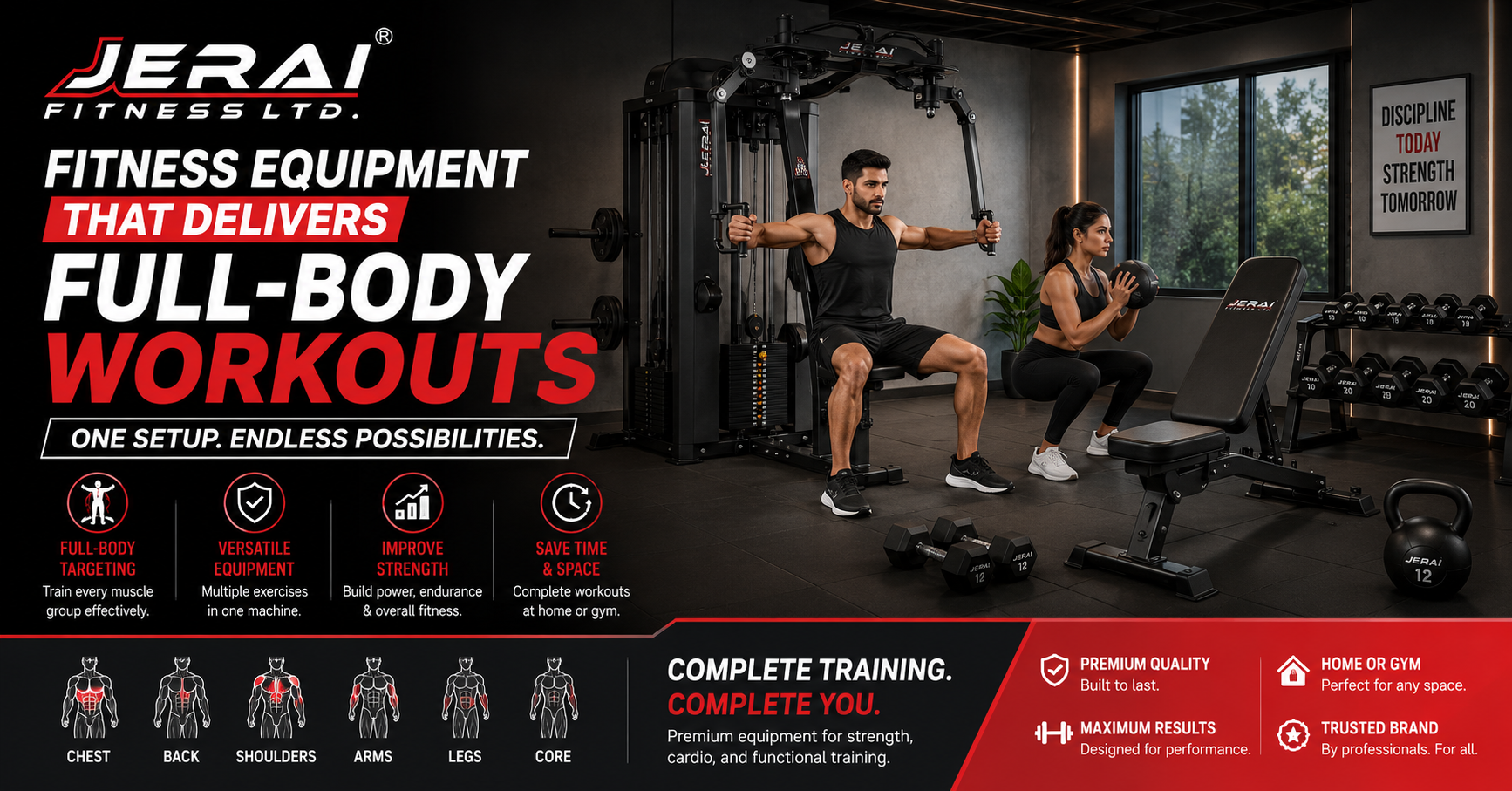
Training the whole body in a single session, or across a well-planned weekly schedule, requires equipment that does not limit you to one muscle group. A chest press machine is great for the chest. A leg press handles the quads. But neither one does much for your core, your pulling muscles, or your cardiovascular system.
The best fitness equipment for full-body workouts earns its place by covering multiple movement patterns: the Treadmill F24, push, pull, hinge, squat, carry, and carry. This guide breaks down the equipment that actually does that, explains the science behind why full-body training works, and shows you how to build home gym equipment that trains everything without needing the floor space of a warehouse.
Why Full-Body Training Outperforms Split Routines for Most People
Before we get into equipment, here is the case for training the full body in each session.
A 2016 meta-analysis published in the Journal of Strength and Conditioning Research compared training frequency for muscle hypertrophy and found that muscles trained two or more times per week showed greater growth than muscles trained once per week, given equal total weekly volume.
Full-body sessions, done three times a week, hit each muscle group twice or more per week as a matter of course. You do not need to plan around it; the structure does the work for you.
For people training at home, this has a practical benefit too. If you miss a session, you have not skipped "leg day" or left a muscle group untrained for two weeks. Every session covers everything. Consistency becomes easier to maintain.
Fitness Equipment for Full-Body Workouts: What to Look For
Not all equipment trains the whole body equally. Here is the criterion worth using: Does this piece of equipment allow compound movements that recruit muscles across multiple joints simultaneously?
Compound movements, squats, deadlifts, rows, presses, carries, and swings produce more total muscle recruitment per set than isolation exercises. They also generate a higher hormonal response and burn more calories. Equipment that supports compound loading is the foundation of any serious full-body home gym.
Let's break it down by equipment category.
1. Barbells and Weight Plates: The Foundation of Compound Loading
No piece of equipment delivers compound strength training as completely as a barbell. The barbell squat loads the quadriceps, glutes, hamstrings, spinal erectors, and core simultaneously. The deadlift is arguably the single movement that trains the most total muscle mass of any exercise in existence. The barbell row builds the upper back, lats, biceps, and rear shoulders in one pull.
An Olympic barbell (20 kg) with a set of rubber-coated or bumper plates gives you a scalable resistance system that grows with you over the years. Start light, add weight in small increments, and the barbell remains your most productive training tool regardless of how strong you get.
What to pair it with: A power rack or squat stand with safety bars. Training alone without safety catches on heavy squat and bench sets is a genuine injury risk. A half-rack takes up less space than a full cage and suits most home setups.
Jerai Fitness carries barbells, rubber-coated plates, and matching storage in their Dumbbells, Plates & Barbells range.
2. Dumbbells: The Most Versatile Full-Body Tool
Dumbbells train every major muscle group. They also introduce a stability demand that barbells do not: each arm works independently, so the weaker side cannot be compensated for by the stronger side. This matters for balanced development and joint health over the long term.
For full-body training, compound dumbbell movements are what you want:
-
Dumbbell goblet squat: Legs, glutes, core
-
Dumbbell Romanian deadlift: Hamstrings, glutes, lower back
-
Dumbbell bent-over row: Upper back, lats, biceps
-
Dumbbell floor press or bench press: Chest, anterior shoulder, triceps
-
Dumbbell thruster (squat to press): Legs, glutes, shoulders, triceps in one movement
A pair of light dumbbells and a pair of heavier dumbbells cover most of these movements. Add a third, heavier pair as strength improves. Rubber-coated dumbbells from Jerai Fitness protect floors, reduce noise in flats, and hold up well in humid Indian conditions.
3. Kettlebells: Strength and Conditioning Together
Kettlebells occupy a unique space in full-body training because they train strength and cardiovascular conditioning at the same time. The kettlebell swing alone recruits the posterior chain (hamstrings, glutes, spinal erectors), core, and upper back while keeping the heart rate elevated enough to count as aerobic work.
The American Council on Exercise found in a 2010 study that a 20-minute kettlebell snatch session burnt an average of 13.6 calories per minute, which places it above moderate-intensity jogging on a caloric expenditure basis.
For full-body sessions, the following kettlebell movements cover nearly every muscle group:
-
Kettlebell swing: Posterior chain, core, grip
-
Turkish get-up: Shoulder stability, core, hip mobility, full-body coordination
-
Goblet squat: Quads, glutes, core, thoracic mobility
-
Single-arm press: Shoulder, triceps, core anti-rotation
-
Suitcase carry: Core, grip, hip stabilisers
The Leather Kettlebell Set from Jerai Fitness suits home training well. The leather coating is more comfortable in the palm during high-rep sets than bare cast iron, and the sets come in multiple weight options.
4. Personal Training Station: Cable-Based Full-Body Training
A cable-based personal training station gives you something that free weights alone cannot: constant tension throughout the full range of motion. When you squat with a barbell, tension is lowest at the top of the movement, where the levers are most favourable. A cable system maintains resistance throughout, producing a different and complementary training stimulus.
Cable stations allow the following:
-
Cable pull-downs: Lats, biceps, upper back
-
Cable rows: Mid-back, rhomboids, rear delts
-
Cable chest flies: Pectoral muscles through full adduction
-
Cable face pulls: Rear delts, external rotators
-
Cable squats and lunges: Legs and glutes with anti-rotation core demand
-
Cable crunches: Abdominals under load
The Personal Training Station 360 from Jerai Fitness is built for residential use and includes multiple cable attachment points, a pull-up bar, and press stations. It covers pulling and pushing movements from a single footprint, which suits medium-sized rooms (100 to 200 sq ft) where one machine needs to do a lot of work.
The Super Personal Training Station takes this further, with a more complete cable system designed for households where more than one person trains or where training variety is a priority.
For the most compact option, the New Super Personal Training Station 75 is described on the Jerai Fitness website as a compact centrepiece for living room setups, with built-in storage for dumbbells, plates, barbells, and accessories.
5. Pull-Up Bar and Dip Stand: Bodyweight Upper-Body Work
Pull-ups and dips deserve their own mention because they train large muscle groups under full bodyweight load with no additional equipment cost beyond a bar or stand.
Pull-ups train the lats, biceps, rear shoulders, and core. Weighted pull-ups, using a dip belt with plates, add progressive overload. Dips train the chest, triceps, and anterior shoulder. Both movements complement barbell and dumbbell pressing by adding serious pulling volume.
A doorframe pull-up bar works for most users. Wall-mounted bars are sturdier for heavier users or those using added weight. Jerai Fitness offers three variants of dip stands at different price points, each suited to bodyweight dip work in a home setting.
6. Plyometric Softbox: Power and Conditioning
Power training, meaning fast, forceful movements, trains the neuromuscular system differently from slow, controlled strength work. Box jumps, step-ups, and depth jumps recruit fast-twitch muscle fibres, develop explosive hip extension, and generate a significant post-exercise oxygen consumption (EPOC) effect that keeps calorie burn elevated for hours after the session.
The Plyometric Softbox Set from Jerai Fitness uses foam-core construction with a soft outer cover. This reduces the injury risk associated with traditional wooden or metal plyo boxes (no hard edges to bark a shin against) while delivering the same training stimulus. The set includes multiple box heights, suited to both beginners stepping up for the first time and experienced trainees doing depth drops.
7. Power Bag and Bulgarian Bag: Functional Strength Across Planes
Most gym equipment trains in a single plane: straight up and down or forward and back. The Power Bag and Bulgarian Bag from Jerai Fitness train rotational strength and movement across multiple planes, which is how the body actually functions in sport and daily life.
The Bulgarian Bag, a crescent-shaped weighted tool, trains rotational power in the shoulders, core, and hips through swinging, spinning, and snatch movements. The Power Bag (a heavy cylindrical bag) suits carrying, slamming, and shouldering movements that train the total body under awkward loads, the kind of load that reveals weaknesses that barbells and cables do not.
These tools add variety and movement quality to a home gym without taking up significant space.
Building a Full-Body Training Session with Home Gym Equipment
Here is a sample full-body session using equipment available through Jerai Fitness. Perform this three times per week, with at least one rest day between sessions.
Warm-up (10 minutes):
-
Kettlebell halos: 2 sets of 10
-
Goblet squat with light kettlebell: 2 sets of 8
-
Band pull-aparts: 2 sets of 15
Main session:
-
Barbell back squat or dumbbell goblet squat: 4 sets of 6 to 8 reps
-
Dumbbell Romanian deadlift: 3 sets of 8 to 10 reps
-
Cable pull-down or pull-up: 3 sets of 8 to 10 reps
-
Dumbbell bench press: 3 sets of 8 to 10 reps
-
Kettlebell swing: 3 sets of 15 to 20 reps
-
Cable crunch or plank variation: 3 sets
Conditioning finisher (optional, 10 minutes):
-
Box jumps on plyometric softbox: 5 rounds of 5 jumps, 60 seconds rest
Rest 60 to 90 seconds between sets. Increase load or reps each week.
How to Choose the Right Equipment for Your Space and Goals
Use this framework when deciding what to buy first.
Compact space (under 100 sq ft): Prioritise dumbbells, a pull-up bar, kettlebells, and a dip stand. These cover full-body compound training with minimal floor demand.
Medium space (100 to 200 sq ft): Add a barbell and plates with a squat stand or half-rack. Include a personal training station for cable work.
Larger space (200+ sq ft): Full barbell setup, personal training station, plyometric box, power bag, Bulgarian bag, and a cardio machine.
Buy rubber interlocking tiles (20 mm minimum thickness) before any heavy equipment arrives. Dropped plates and kettlebell swings on bare tile floors damage the floor and create noise that travels to neighbours below.
FAQs: Fitness Equipment for Full-Body Workouts
Q1. Which single piece of equipment is the most effective for training the full body at home?
A barbell with weight plates covers the most ground if space allows. Squats, deadlifts, rows, and overhead presses together train every major muscle group. If space is a constraint, an adjustable dumbbell set is a close alternative and requires far less room.
Q2. Can I get a proper full-body workout using only dumbbells and no machines?
Yes. Compound dumbbell movements, including goblet squats, Romanian deadlifts, bent-over rows, and thrusters, train legs, back, chest, shoulders, and arms together. Adding a pull-up bar and kettlebells fills the gaps. Many experienced trainees build and maintain full-body strength this way for years.
Q3. How does a personal training station differ from a standard multi-gym machine for full-body training?
A personal training station uses adjustable cable pulleys that allow free movement in multiple directions, training the stabilising muscles alongside the primary movers. A standard multi-gym typically guides movement through a fixed path. For full-body functional training, the cable freedom of a personal training station gives you more exercise variety and better carries over to real-life movement.
Q4. How many days per week should I train full body for strength and muscle gain?
Three days per week is the evidence-backed standard for full-body resistance training. A 2016 review in the Journal of Strength and Conditioning Research found that training frequency of twice or more per week produces greater muscle hypertrophy than once per week with equal total volume. Three full-body sessions per week, with rest days in between, hit each muscle group twice and allow adequate recovery.
Q5. Are Bulgarian bags and power bags worth buying for home gym training?
They are worth buying if you want to develop rotational strength, improve athletic performance, or add variety that keeps training engaging. They do not replace barbells or dumbbells for pure strength development, but they train movement patterns (rotating, shouldering, carrying awkward loads) that standard equipment does not address. For a home gym already equipped with free weights and a cable station, they are a practical next addition.