

Essential Equipment for Home Gym: A Room-by-Room Setup Guide for Indian Homes
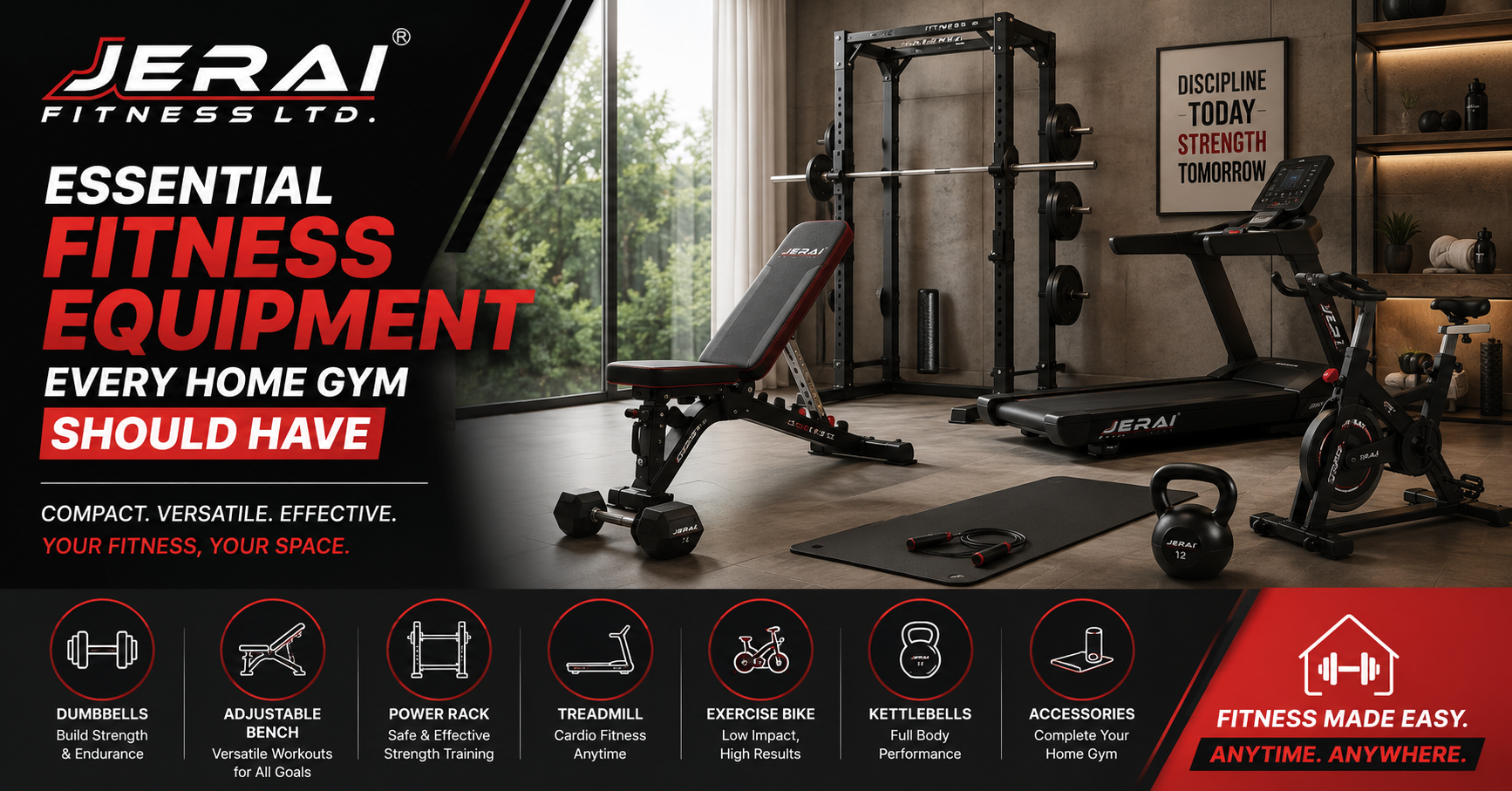
Setting up home gym equipment sounds like a big project. But once you figure out what you actually need, it gets surprisingly manageable. You do not need a massive spare room or a commercial-grade setup to train well at home. What you do need is the right mix of equipment that covers strength, cardio, and recovery without eating up your entire floor plan.
This guide walks you through the must-have gear for a functional home gym, whether you are working with a compact flat in Mumbai or a dedicated space in a larger house.
Why More Indians Are Investing in Home Gym Equipment
Gym memberships have their place, but they also come with commute time, peak-hour crowds, and monthly fees that add up over years. A 2023 survey by the Sports Goods Export Promotion Council of India found that home fitness equipment sales grew sharply post-2020 and have held steady since, with strength training gear and cardio machines leading demand.
The appeal is straightforward. You train on your schedule. You do not wait for a bench to free up. And over time, owning quality equipment often works out to be more economical than a long-term gym subscription.
What Goes Into a Well-Rounded Home Gym Setup
A good home gym covers three broad areas: strength training, cardiovascular fitness, and functional movement. Here is how to think about each one.
1. A Reliable Workout Bench
The workout bench is the starting point for most strength setups. You use it for pressing movements, rows, step-ups, and core work. A flat bench works, but an adjustable bench that moves from flat to incline (and ideally decline) gives you far more exercise options with a single piece of furniture.
When shopping, check the weight capacity rating and the padding density. Thin, cheap padding compresses quickly and makes heavier pressing sessions uncomfortable.
2. Dumbbells or an Adjustable Dumbbell Set
Dumbbells are the workhorses of any home gym. They train almost every muscle group, suit beginners and advanced lifters alike, and take up far less space than a full barbell rack.
Here is the decision: fixed dumbbells or adjustable?
Fixed dumbbells (sold in sets) give you immediate access to multiple weights at once. Adjustable dumbbells let you change resistance by turning a dial or sliding a pin. For smaller spaces, adjustable sets are practical. For people who train frequently with heavy loads, a rack of fixed dumbbells tends to hold up better over the long run.
At Jerai Fitness, the dumbbell range includes cast iron and rubber-coated options in sets that suit different training stages. Starting with a lighter pair and a heavier pair covers most compound and isolation movements.
3. Barbells and Weight Plates
Once you move past beginner-level training, barbells open up compound lifts that build real strength: squats, deadlifts, bench press, and rows. A standard Olympic barbell (20 kg) pairs with weight plates to give you a scalable resistance system that grows with you.
Rubber-coated plates protect your floor and reduce noise, which matters if you live in a flat or have neighbours below. The combination of a barbell, a plate set, and a squat rack or power rack forms the backbone of a strength-focused home gym.
4. A Treadmill for Cardio
Walking and running remain among the most well-studied forms of cardiovascular exercise. The American College of Sports Medicine recommends at least 150 minutes of moderate-intensity aerobic activity per week for general health (Source: American College of Sports Medicine, ACSM's Guidelines for Exercise Testing and Prescription, 10th Edition, 2018, https://www.acsm.org).
A motorised treadmill lets you meet that target regardless of weather, air quality, or the time of day. When selecting one, look at the motor rating (continuous horsepower, not peak), the running belt dimensions, and the incline range. For walking, a narrower belt is fine. For running, a belt width of at least 50 cm and a length of 140 cm or more gives you room to stride naturally.
Jerai Fitness carries the Treadmill F24, built for home use with a focus on consistent motor performance and a sturdy frame.
5. A Spinning Bike or Stationary Cycle
Not everyone enjoys running. For low-impact cardio that goes hard on the lungs without stressing the joints, a spinning bike is a smart pick. It suits people with knee issues, those recovering from injury, and anyone who wants a high-intensity interval training option at home.
Spinning bikes with a weighted flywheel (18 kg or heavier) provide smooth, consistent resistance that mimics the feel of road cycling. Look for adjustable seat height and handlebar position so the bike fits your body, not the other way around.
6. A Multi-Station Home Gym or Personal Training Station
If space allows, a multi-station gym machine or a personal training station covers cable work, pull-downs, chest press, and more from a single footprint. These machines suit households where more than one person trains, since different exercises can happen simultaneously on different stations.
Jerai Fitness offers the Personal Training Station 360 and the Super Personal Training Station, both designed for residential use with cable systems, pull-up bars, and press attachments built in. These are worth considering if you want one piece of equipment that replaces several individual machines.
7. Kettlebells for Functional Strength
Kettlebells train strength and conditioning together. Swings, goblet squats, Turkish get-ups, and cleans are compound movements that work the posterior chain, core, and shoulders at once.
A pair of kettlebells (one moderate, one heavier) covers a wide range of movements. Leather-coated kettlebells, like the sets available through Jerai Fitness, handle daily use well and feel more comfortable in the palm during high-rep sets than bare cast iron.
8. A Pull-Up Bar or Dip Stand
Pulling movements are often the most neglected part of home gyms because they require overhead support. A wall-mounted or door-frame pull-up bar solves this at a low cost. Dip stands add parallel bar pressing and bodyweight triceps work.
Both pieces develop upper-body pulling and pushing strength that complements dumbbell and barbell work. They also take up almost no floor space.
9. Resistance Bands
Resistance bands are underrated pieces of kit. They work well for warm-ups, mobility work, and as a standalone training tool when you travel or need a light session. Therapists use them in rehabilitation for good reason: they provide tension throughout the full range of motion, which challenges muscles differently than free weights.
A set that includes light, medium, and heavy bands covers the most ground.
10. Gym Flooring
This one often gets skipped until something goes wrong. Rubber flooring protects your floor from dropped weights, reduces vibration, and gives you traction during deadlifts and squats. Interlocking rubber tiles (20 mm thick or more) are the practical choice for home gyms. They go down without adhesive and can be rearranged if your layout changes.
How to Plan Your Home Gym by Space
Not every home has the same square footage to spare. Here is a quick breakdown.
Small space (under 100 sq ft): An adjustable dumbbell set, a foldable bench, resistance bands, and a pull-up bar cover strength training. A compact spinning bike handles cardio.
Medium space (100 to 200 sq ft): Add a barbell and weight plates, a dip stand, and a treadmill. This gives you a full strength and cardio setup.
Larger space (200+ sq ft): A personal training station or multi-gym machine fits here without crowding other equipment. Add a medicine ball and a wall ball for functional training variety.
What to Check Before You Buy
Let's break it down by the three things that trip people up most.
Weight capacity: Every bench, machine, and rack carries a maximum user and load weight. Always check this against what you plan to lift, not just your body weight.
Dimensions: Measure your space before ordering, and include clearance on all sides. A treadmill needs extra room at the back for safe use. A cable machine needs overhead clearance.
Warranty: Good fitness equipment comes with structural warranties. Jerai Fitness, for instance, covers manufacturing defects as part of its warranty terms. Read the fine print before purchasing so you know what is covered.
Building Your Setup Over Time
You do not need to buy everything at once. Here is a practical order if you are starting from scratch:
-
Adjustable dumbbells and a bench (covers most upper-body and lower-body movements)
-
Resistance bands and a pull-up bar (adds pulling work and warm-up tools)
-
A treadmill or spinning bike (adds cardiovascular training)
-
Barbell, plates, and a rack (builds out heavy compound lifting)
-
A personal training station or multi-gym (adds cable work and variety)
Each step builds on the last. You can be fully functional after step two and add equipment as your training goals or budget evolves.
Safety Considerations for Home Gym Training
Training alone at home means no spotter for heavy lifts. Keep these points in mind:
-
Use a power rack with safety bars for heavy squats and bench presses.
-
Start lighter than you think you need to when trying new movements.
-
Keep your floor clear of clutter around barbells and dumbbell racks.
-
If you are unsure about form, use the video exercise library on the Jerai Fitness app, which connects to their equipment range and includes detailed movement instructions.
The Indian Council of Medical Research notes that injury risk in recreational strength training drops sharply when proper form is maintained and progressive overload is applied gradually.
FAQs About Essential Equipment for a Home Gym
Q1. What is the minimum essential equipment for home gym training if I am just starting?
Start with a pair of dumbbells, a flat bench, and resistance bands. These three items cover most pushing, pulling, and hinging movements. Once you build consistency, add a pull-up bar and then progress to heavier free weights or a cardio machine.
Q2. How much space do I need for a basic home gym setup in an Indian flat?
A 6- by 8-foot area (roughly 4.5 sq metres) is workable for a compact setup with dumbbells, a bench, and a mat. A treadmill or multi-station machine needs a larger area, ideally 10 by 12 feet or more, with a ceiling height of at least 8 feet.
Q3. Are home gym machines as effective as commercial gym equipment?
Yes, when they are built to proper engineering standards. Home gym machines designed with accurate cable ratios, correct seat positioning, and appropriate weight stacks produce the same training results as commercial equivalents. Build quality and material grade determine effectiveness more than the label.
Q4. How do I choose between a treadmill and a spinning bike for home cardio?
It depends on your joints and your preferences. A spinning bike is lower impact and suits people with knee or hip concerns. A treadmill replicates natural walking and running patterns. If you enjoy both or want variety, check whether your space and budget can accommodate one machine that does both, or plan for one now and the other later.
Q5. What should I look for when buying dumbbells for a home gym in India?
Look at the coating (rubber-coated is quieter and floor-friendly), the grip diameter (knurled handles give better control), and whether the set covers both light and heavy ranges. Fixed dumbbells last longer under daily heavy use. Adjustable sets suit people with limited storage space.